The Hyundai Alcazar starts at Rs 14.99 lakh (ex-showroom) as of mid-2025, which puts it roughly Rs 4 lakh above the base Hyundai Creta — according to Hyundai India’s official price list. That gap sounds straightforward, but the buying decision between these two SUVs is far more nuanced than price alone. Both share the same platform, same family DNA, and in the higher trims, even the same 1.5-litre turbo-petrol engine. Yet they are built for genuinely different buyers.
This article covers the Hyundai Alcazar vs Creta debate in full — size and seating, engine and mileage, features and cabin quality, real-world ownership costs, and which one actually makes sense for different types of Indian families. Whether you are a nuclear family prioritising city fuel economy or a joint family that needs a proper third row, this breakdown tells you exactly where the trade-offs fall.
Most comparison articles stop at spec sheets. This one goes further — covering the third-row usability gap that most reviews gloss over, the real difference in boot space once all rows are folded, and the one specific variant in each lineup that gives you the most value for money right now.
Hyundai Alcazar vs Creta: Size, Dimensions, and What That Extra Length Actually Means
The Alcazar is built on a stretched version of the Creta’s platform. It is approximately 150 mm longer and sits about 30 mm taller than the Creta. Those numbers translate directly into third-row headroom and legroom — two things you cannot retrofit. According to data published on CarDekho, the Alcazar’s wheelbase is 2,760 mm, which is meaningfully longer than the Creta’s 2,610 mm. That extra 150 mm goes almost entirely into the cabin.
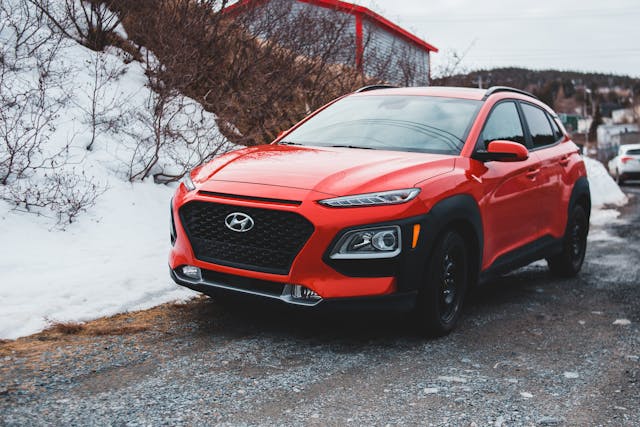
The Alcazar also rides on 18-inch alloy wheels versus the Creta’s 17-inch units, which gives it a visually more substantial stance. Up front, the 2024 facelift gave the Alcazar its own H-shaped LED DRL signature — distinct from the Creta’s inverted-L pattern — so you can actually tell the two apart at a glance now, which was harder with the pre-facelift models.
For Hyundai Creta ground clearance and full dimensions, both vehicles share 190 mm of ground clearance — so off-road capability and underbelly protection are identical. The Alcazar is simply larger, not more capable off-road. If you are buying size purely to impress, the Alcazar does that. If you need size because you have six or seven people to move regularly, it earns every rupee of its premium.
Engine, Mileage, and Gearbox Options Compared
Both SUVs share overlapping engine options, but there are meaningful differences at the top of the lineup. The Creta offers three engine choices: a 1.5-litre naturally aspirated petrol (113 bhp), a 1.5-litre turbo-diesel (115 bhp), and a 1.5-litre turbo-petrol (158 bhp). The Alcazar drops the naturally aspirated petrol option entirely — it is only available with the 1.5-litre diesel or the 1.5-litre turbo-petrol, both paired with either a 6-speed manual or a 6-speed automatic.
| Spec | Hyundai Creta | Hyundai Alcazar |
|---|---|---|
| Starting Price (ex-showroom) | Rs 10.79 lakh | Rs 14.99 lakh |
| Top Variant Price | Rs 20.32 lakh | Rs 21.74 lakh |
| Engine Options | 1.5L NA Petrol, 1.5L Turbo Petrol, 1.5L Diesel | 1.5L Turbo Petrol, 1.5L Diesel |
| Max Power (Turbo Petrol) | 158 bhp | 158 bhp |
| Claimed Mileage (Diesel) | 21.8 kmpl | 20.4 kmpl |
| Seating | 5 seats | 6 or 7 seats |
| Wheelbase | 2,610 mm | 2,760 mm |
| Ground Clearance | 190 mm | 190 mm |
| Alloy Wheel Size | 17 inch | 18 inch |
The mileage gap between the two diesel variants is real. The Creta diesel returns a claimed 21.8 kmpl versus the Alcazar diesel’s 20.4 kmpl, according to ARAI-certified figures. That 1.4 kmpl difference adds up over a year if you do highway kilometres regularly. The added weight of the Alcazar’s longer body is the primary reason for this gap. If diesel efficiency matters to you, the Creta wins by a noticeable margin.
One thing most comparison articles miss: the Creta diesel also gets a panoramic sunroof across SX and SX(O) trims, while the Alcazar diesel does not — Hyundai has reserved the panoramic sunroof on the Alcazar for petrol variants only. If a pano sunroof is on your checklist and you want diesel, the Creta is your only option within this family.
Cabin Features, Second-Row Comfort, and What the Alcazar Does Differently
This is where the Alcazar earns its price premium — but only if you regularly use the second row as a passenger, not as a driver. In its 6-seater captain seat configuration, the Alcazar’s middle row gets ventilated seats, extendable under-thigh support, winged headrests, foldable tray tables, and dedicated cup holders. These are features the Creta simply does not offer, because it has no middle-row captain seat layout. For families that are regularly chauffeured — executives, or anyone doing long highway runs as a rear-seat passenger — this comfort difference is substantial.
The 7-seater Alcazar replaces those captain seats with a bench, which reduces second-row comfort but gives you a third-row seat for a seventh passenger. The third row in the Alcazar is usable for adults on shorter trips and comfortable for children — but let’s be honest, it is not a place you want to spend two hours on an expressway. Legroom in the third row is adequate, not generous.
Both cars share largely the same dashboard layout after the 2024 facelift, with Hyundai keeping the dark blue and tan colour theme for the Alcazar and grey-black for the Creta. Exclusive features on the Alcazar include an electric boss mode (which reclines the front seat for rear-seat passengers), NFC-based Digital Key, and memory function for the driver’s seat — none of which are available on the Creta. To understand what specific trim levels and configurations look like on the Creta itself, our detailed breakdown of Hyundai Creta SX, Knight, and N Line configurations covers every variant in depth.
Quick Note: If you are choosing the Alcazar for the third row, always test the third-row entry and exit before booking. The Alcazar’s rear door opening angle is narrower than you might expect, and tall passengers can find it awkward to climb in with a full second row occupied.
Boot Space, Real-World Practicality, and the Number Nobody Talks About
Here is the trade-off that almost every comparison article buries or ignores entirely: boot space when all rows are occupied. The Alcazar’s boot capacity drops to around 180 litres with all three rows up — which is barely enough for a couple of soft cabin bags. The Creta, with just two rows and five seats, gives you a spacious 433 litres behind the rear seats with no compromise at all.
If you travel as a family of five and also carry luggage — a common scenario for Indian highway trips to hill stations or religious destinations — the Creta is the more practical choice unless you are willing to fold the Alcazar’s third row every time. Folding the third row does unlock meaningful cargo space, but it defeats the purpose of having those seats in the first place.
The Creta also retains a full-size spare tyre. The Alcazar diesel does not — it comes with a space-saver spare, primarily because the longer body and third-row seat assembly leave no room for a full-sized unit under the boot floor. On Indian roads and highways where tyre punctures are common, this is a real-world consideration that rarely gets discussed in spec comparisons. For buyers who cover long intercity distances, this matters.
Our take: If your family genuinely has six or seven members who travel together regularly, the Alcazar is the right answer — period. But if you are a family of four or five buying the Alcazar because it looks more impressive or because you “might” need the extra seats someday, you are paying Rs 4–5 lakh extra for capacity you will rarely use, while giving up boot space, diesel mileage, and pano sunroof availability on diesel trim. The Creta is a better everyday vehicle for most Indian urban and semi-urban buyers.
Safety, ADAS, and Which Car Gives You More Airbags for the Money
Both the Creta and Alcazar now come with six airbags as standard across most variants, following Hyundai India’s safety upgrade push. Both also offer Level 2 ADAS on higher trims, including features such as blind-spot collision warning, lane-keeping assist, and forward collision avoidance. The technology stack is largely identical because both vehicles share the same base platform and electronics architecture.
On crash ratings, the pre-facelift Alcazar received a 4-star Latin NCAP rating. The Creta has achieved a 5-star ASEAN NCAP rating but only a 3-star Global NCAP rating — a discrepancy that reflects the difference in test protocols rather than a sudden drop in structural integrity, according to analysis published by GoMechanic. Neither the facelifted Creta nor the 2024 Alcazar facelift have been independently tested under Bharat NCAP as of mid-2025, which is an honest limitation buyers should know before assuming the highest level of crash protection.
For buyers choosing between variants purely on safety grounds, the Alcazar’s top trims do offer the electric boss mode and additional rear-seat safety features not available on the Creta — but the core passive safety (airbags, structural integrity, seatbelts) is equivalent between the two at comparable price points. If you want an informed look at how the Creta’s accessories and add-on safety kits stack up in value terms, our guide on Hyundai Creta accessories without overpaying breaks down what is worth buying and what is not.
Frequently Asked Questions
Is the Hyundai Alcazar just a bigger Creta?
Technically yes — the Alcazar is built on a stretched version of the Creta’s platform with a longer wheelbase of 2,760 mm versus the Creta’s 2,610 mm. But the differences go beyond just adding a third row. The Alcazar gets its own front styling, 18-inch alloys, unique interior colour scheme, and exclusive features like electric boss mode, NFC Digital Key, and ventilated captain seats in the second row. It is a distinct product aimed at a different buyer profile, even if it shares its underpinnings with the Creta.
Which is better for fuel economy — Creta or Alcazar?
The Creta is more fuel-efficient in both petrol and diesel variants, due to its lighter body weight. According to ARAI-certified figures, the Creta diesel returns 21.8 kmpl versus 20.4 kmpl for the Alcazar diesel — a gap of 1.4 kmpl. Over 20,000 km per year at Rs 90 per litre, this translates to roughly Rs 2,000–2,500 in additional fuel costs annually for the Alcazar. The Creta’s naturally aspirated petrol option also offers better day-to-day city mileage for buyers who do not need turbo performance.
Does the Alcazar have a panoramic sunroof?
Yes, but only on petrol variants. The Alcazar diesel does not get a panoramic sunroof in any trim — this is one of the most overlooked differences between the two models. In contrast, the Creta diesel offers a panoramic sunroof on SX and SX(O) trims. If a pano sunroof is important to you and you prefer diesel, the Creta is your only option within the Hyundai family at this price point.
How much boot space does the Alcazar have compared to the Creta?
The Creta offers 433 litres of boot space with its rear seats in the standard position. The Alcazar’s boot capacity drops to approximately 180 litres when all three rows are occupied — barely enough for short family trips with soft luggage only. Folding the third row significantly increases Alcazar boot space, but then you are not using the seats you paid extra for. For families who need both seating and luggage capacity simultaneously, this is a serious practical trade-off.
Is the Alcazar worth the extra money over the Creta?
It depends on your actual usage pattern. The Alcazar is worth the premium if you regularly travel with six or seven people, often use the rear seats for long highway trips where the ventilated captain chairs and tray tables make a real difference, or need the additional prestige features like NFC Digital Key and electric boss mode. For a family of four or five who primarily drives in the city, the Creta offers better value, better mileage, more variant choices, and no compromise on boot space — at Rs 4–5 lakh less.
Which Hyundai Creta variant gives the best value right now?
The Creta SX petrol automatic (turbo) hits the sweet spot for most urban Indian buyers — it gives you the turbo engine, panoramic sunroof, ADAS suite, and ventilated front seats without stretching to the top SX(O) trim, which adds features most people rarely use. If diesel efficiency is your priority, the SX diesel manual remains one of the most cost-effective SUVs in the mid-size segment right now. You can check Hyundai Creta city-specific ex-showroom and on-road prices to get an accurate figure for your location before visiting a dealership.
Final Thoughts
The Hyundai Alcazar vs Creta decision comes down to one honest question: do you need three rows or not? If yes — genuinely, regularly, for six or seven actual passengers — the Alcazar is a well-sorted, feature-rich SUV that justifies its premium. If you are on the fence, defaulting to the Creta is the smarter move. You get better mileage, more variant flexibility, more boot space, panoramic sunroof availability on diesel, and a lower purchase price. The Creta’s decade-long dominance of the mid-size SUV segment in India is not an accident — it is the right fit for the widest possible range of Indian buyers.
Your next step should be booking a test drive of both, specifically sitting in the Alcazar’s third row as a passenger for at least 15–20 minutes on a real road — not just a dealership parking lot. That experience alone will either confirm or eliminate the Alcazar from your shortlist. For a detailed look at what the Creta looks and drives like across its full specification range, read our Hyundai Creta configuration guide covering SX, Knight, and N Line variants before you finalize your decision.