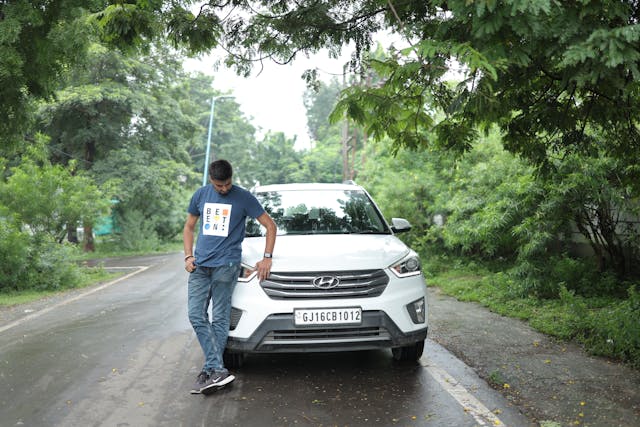

The Hyundai Creta 2017 was priced from ₹9.28 lakh at launch, according to Hyundai Motor India Ltd’s official press release — making it one of the most aggressively positioned mid-size SUVs of its era. That starting price bought you three engine options, fifteen variants, and a feature list that genuinely outpaced anything else in the segment at the time. For buyers hunting the used market today, a well-kept Hyundai Creta 2017 model still turns heads and delivers daily without drama.
This article covers everything a potential buyer, current owner, or curious researcher needs to know about the Hyundai Creta 2017: the full variant lineup, engine and mileage figures, real-world performance, known issues to watch for, and honest advice on whether a used 2017 Creta is worth buying in 2025–26. It also compares the 2017 model to the 2015, 2016, 2018, and 2020 versions so you know exactly how each generation evolved.
Most articles about the Creta 2017 either recycle press-release specs or give vague used-car warnings. This one does neither. You will get specific variant recommendations, honest trade-off acknowledgements, and real resale numbers sourced from the market — so you can make a confident decision whether you are buying, selling, or simply evaluating what you already own.
Hyundai Creta 2017: Engine Options, Variants and Mileage
The 2017 model year brought fifteen variants across three powertrains. Hyundai added two new entries to the lineup: the E+ Executive variant in the 1.4-litre diesel, priced at ₹9.99 lakh, and the SX+ Dual Tone trim across 1.6-litre petrol and 1.6-litre diesel options. This was a strategic move to plug the mid-range gap that earlier trim structures left open.
The three engines remained mechanically identical to the 2015 and 2016 models. The 1.6-litre petrol returns up to 15.29 KMPL under ARAI testing. The 1.4-litre diesel returns up to 21.38 KMPL, and the 1.6-litre diesel delivers 19.67 KMPL. In real-world Indian city traffic, petrol owners typically see 9–11 KMPL while the 1.6 diesel holds closer to 14–16 KMPL — the difference matters significantly over a three-to-five year ownership cycle.
The 1.6-litre petrol produces 121 PS and 151 Nm, giving the Creta a confident highway character. The 1.6-litre diesel makes 128 PS and 260 Nm — that torque figure explains why diesel variants have historically commanded higher resale prices. Ground clearance across all 2017 variants sits at 190 mm, which handles most Indian road conditions without complaint. For full dimensional specs and boot space figures, the Hyundai Creta ground clearance and dimensions guide has all numbers verified against official Hyundai India data.
| Engine | Power | ARAI Mileage | Transmission |
|---|---|---|---|
| 1.6L Petrol | 121 PS | 15.29 KMPL | Manual / Automatic |
| 1.4L Diesel | 90 PS | 21.38 KMPL | Manual only |
| 1.6L Diesel | 128 PS | 19.67 KMPL | Manual / Automatic |
Hyundai Creta 2017 vs 2015, 2016, 2018 and 2020: How Each Year Differs
The Hyundai Creta 2015 model was the original launch — stripped of some features but mechanically identical to what followed. The 2016 model added minor cosmetic updates and variant restructuring. The Hyundai Creta 2017 model was the first year to introduce Apple CarPlay, Android Auto, and MirrorLink across the SX+ tier via the 7-inch AVN infotainment system — a meaningful upgrade for anyone who relies on smartphone connectivity while driving.
The Hyundai Creta 2018 model maintained the same first-generation body and powertrains but arrived just before the BS6 emission norms began reshaping the market. The Hyundai Creta 2020 white and other second-generation variants launched in March 2020 represented a true generational leap — larger dimensions, a completely new interior, polarising exterior design, and significantly upgraded features. The 2020 model was not a facelift; it was a ground-up replacement of the 2015–2018 generation.
If you are comparing the 2017 and 2018 models specifically, the differences are minor — almost cosmetic. The 2017 is slightly cheaper on the used market and equally reliable. If budget allows and you can find a well-maintained 2020, the technology gap is real. But for buyers spending ₹4–7 lakh in the used market, the 2017 Creta 1.6 diesel SX+ remains a highly capable daily driver. For those evaluating whether the Hyundai Alcazar makes more sense than an older Creta, the Hyundai Alcazar vs Creta comparison for Indian families covers the value case in detail.
What the Hyundai Creta 2017 Gets Right for Indian Buyers
The feature list on SX+ variants was genuinely impressive for its price point in 2017. You got a sunroof-delete — no panoramic glass — but you did get a 7-inch touchscreen with smartphone mirroring, automatic climate control, rear AC vents, push-button start, leather seats, and a reverse camera. The dual-tone paint options like Polar White with Black roof and Red Passion with Black gave the Creta visual distinction that its rivals lacked.
Safety equipment included dual airbags and ABS with EBD as standard across variants — a baseline that mattered. The 2017 Creta achieved a four-star rating in Latin NCAP crash testing, with good-to-adequate protection for adult occupants in frontal impacts. Child occupant protection scored three stars, and the car lost points for lacking a passenger airbag deactivation switch and three-point rear centre seat belts. These are real limitations that buyers evaluating the 2017 model should factor in, particularly families with young children.
Hyundai’s service network has always been one of its strongest competitive advantages. According to Hyundai India’s official network data, the brand operates over 1,400 service touchpoints across the country — making parts availability and scheduled maintenance far less stressful than with many rivals. For current service intervals and what to expect at each service milestone, the Hyundai Creta service schedule and real costs guide is worth reading before you buy.
Quick Note: The 1.4-litre diesel variant is best suited to buyers who cover long highway distances regularly. For primarily city use, the 1.6-litre petrol manual is more refined and cheaper to service over time.
Known Problems With the Hyundai Creta 2017 Model — What to Check Before Buying
No car is perfect, and the first-generation Creta has documented issues worth knowing. Suspension wear is the most common complaint on high-mileage examples — specifically front lower arm bushings and shock absorbers on cars that have covered over 80,000 km. Budget ₹8,000–₹15,000 to replace these if the car you are evaluating has not had them attended to. A quick test drive on a rough road section reveals this within minutes.
Clutch wear on manual variants is another watch point. The 1.6-litre diesel manual in particular can have a heavier clutch feel by the time it reaches 60,000–70,000 km, especially in cars that have seen heavy city traffic. Ask for service records and check when the clutch was last serviced. Electrical niggles — specifically infotainment screen freezing and intermittent Bluetooth connectivity — are well-documented on 2017 models and usually resolved with a software update at a Hyundai service centre.
Our take: For a used 2017 Creta, the 1.6-litre diesel SX+ manual is the variant worth targeting — it gives you the full feature set, the most usable torque for mixed driving, and the strongest resale retention. Avoid automatic diesel examples unless you can confirm the gearbox has been serviced and shows no jerking during downshifts. A one-hour pre-purchase inspection at an authorized Hyundai service centre costs around ₹500–₹800 and is absolutely worth it on any first-gen Creta older than five years.
Hyundai Creta 2017 Resale Value and What to Expect in the Used Market
The Creta’s resale story is one of the strongest in the Indian compact SUV segment. According to Cars24, even an eight-year-old Creta retains approximately 45% of its original purchase value — a figure that beats most rivals in the same segment. A three-year-old Creta retains over 75%. For the 2017 model specifically, well-maintained SX+ diesel examples were trading in the ₹5.5–₹7.5 lakh range through 2025, depending on mileage and condition.
The Hyundai Creta 2020 white and other second-generation models command a premium in the used market — typically ₹9–₹14 lakh depending on variant and mileage. That price gap between the 2017 and 2020 models is real and significant. The 2020 gives you a much larger cabin, a more modern interior, and significantly better safety tech. The 2017 gives you a proven powertrain, lower acquisition cost, and lower insurance premiums. Neither is a bad choice — the right one depends on your budget ceiling.
Factors that move the needle on 2017 Creta resale prices: a full Hyundai service history adds ₹30,000–₹50,000 to the asking price and justifies it. Single-owner cars are preferred. White and silver colours sell faster than darker shades in most Tier 1 and Tier 2 Indian cities. High-end variants like SX+ sell for 20–25% more than base E or S trims of the same year and mileage. If you are buying, prioritize service history over mileage alone. If you are selling, get the car serviced and detailed before listing — it makes a measurable difference.
For buyers considering newer configurations on a bigger budget, the 2023–2024 Hyundai Creta configurations guide covering SX, Knight and N Line breaks down what each trim level actually delivers versus its price.
Frequently Asked Questions
Is the Hyundai Creta 2017 a good buy in 2025–26?
Yes, with conditions. A 2017 Creta with a verifiable Hyundai service history, under 80,000 km, and no major accident record is a solid used buy. The 1.6-litre diesel SX+ is the sweet spot variant. Expect to spend ₹5–₹8 lakh depending on condition. At that price, you get proven reliability, a wide service network, and strong parts availability — which is not guaranteed with less popular alternatives in the same budget range.
What is the difference between the Hyundai Creta 2017 and 2018 model?
Mechanically, almost nothing. Both share the same three-engine lineup, same body dimensions, and same variant structure. The 2018 model was the final year of the first generation before the BS6-compliant second generation arrived in 2020. On the used market, a 2018 car tends to cost ₹30,000–₹70,000 more than a comparable 2017 — a premium that only makes sense if the service history and condition are better, not just the year on the registration certificate.
How many kilometres can a Hyundai Creta 2017 diesel last?
The 1.6-litre diesel engine used in the Creta 2017 has demonstrated durability well past 1.5 lakh km when maintained on schedule. Examples with 2–2.5 lakh km are documented in Indian ownership communities, typically owned by high-mileage commercial or intercity users. For a personal car with regular servicing, 1.5–2 lakh km of reliable operation is a realistic expectation. The key variables are regular oil changes, timing belt replacement at the manufacturer-specified interval, and avoiding prolonged over-revving.
Does the Hyundai Creta 2017 have a sunroof?
No. None of the fifteen variants in the 2017 lineup offered a sunroof — not even the top-spec SX+ 1.6 AT CRDI. This is one of the clearest feature gaps between the first generation and the 2020+ models, which introduced a panoramic sunroof on higher trims. If a sunroof is a non-negotiable requirement, you will need to look at the second-generation Creta or add an aftermarket sunroof, which carries its own set of warranty and waterproofing considerations.
Which variant of the Hyundai Creta 2017 is best for buying used?
The SX+ 1.6 CRDI (manual) is consistently the most sought-after first-generation Creta on the used market, and for good reason — it bundles the full feature set with the strongest engine and the highest resale demand. If the diesel price premium stretches the budget, the SX+ 1.6 Petrol manual is the next best option. Avoid base E and S variants unless the price is compelling enough to offset the missing features, since they are harder to resell and offer a meaningfully lesser ownership experience.
What is the on-road price of a used Hyundai Creta 2017 today?
Used 2017 Creta prices in 2025–26 typically range from ₹4.5 lakh for high-mileage base variants to ₹8 lakh for low-mileage SX+ diesel examples with full service history. Prices vary by city — metros like Mumbai, Delhi, and Bangalore tend to price used Cretas 5–10% higher than Tier 2 cities due to stronger demand. Always get an independent inspection before closing a deal, and cross-check the asking price against current listings on Cars24 and Spinny for your specific city.
Final Thoughts
The Hyundai Creta 2017 holds up better than most nine-year-old cars have any right to. Its engines are proven, its service network is unmatched, and the used market prices still reflect genuine demand rather than bargain-bin desperation. The absence of a sunroof and dated infotainment are the honest trade-offs you accept — but if those features are not on your priority list, the 2017 Creta SX+ diesel remains one of the most sensible used SUV purchases available under ₹8 lakh in India today.
Your next step: shortlist two or three 2017 Creta listings in your city, filter for SX or SX+ variants with service history, and book a pre-purchase inspection at your nearest Hyundai authorized workshop before paying any advance. That inspection is the one step most buyers skip and later regret skipping.